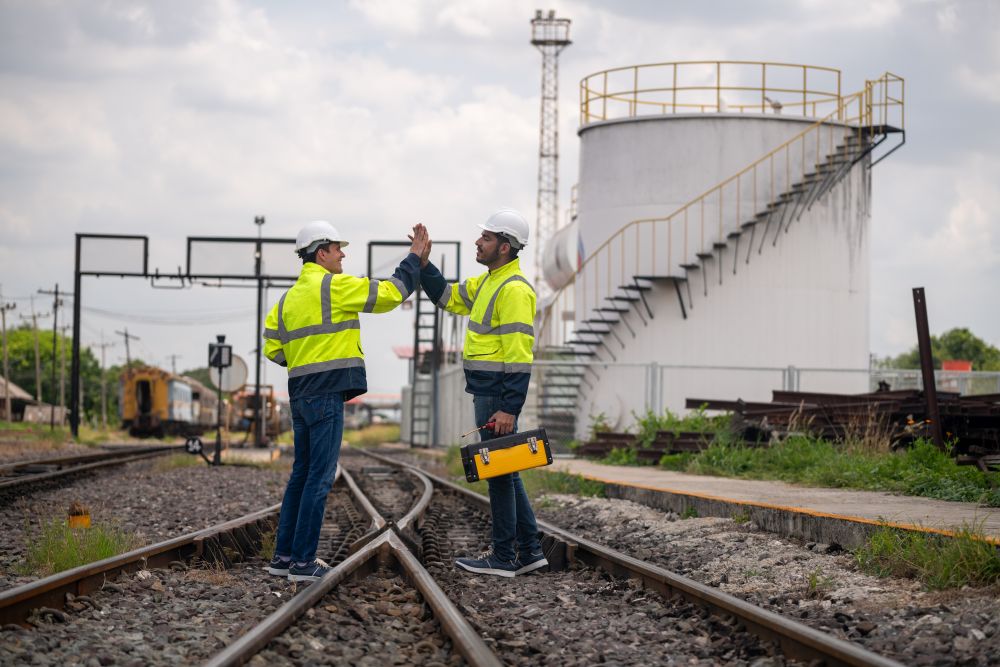
THT Academy’s Rigger and signalman course represents more than skills training—it embodies a quiet revolution in workplace safety, transforming Singapore’s construction industry. The unsung heroes operating cranes and coordinating loads carry the weight of both ambition and responsibility on their shoulders.
The Statistical Reality of Construction Risk
Singapore’s construction sector operates within a framework of sobering statistics that demand urgent attention. The workplace fatal injury rate of the construction sector reached 3.4 fatal injuries per 100,000 employed persons in 2023, representing a rate triple that of the overall workplace injury average. These figures tell a story of systemic challenges that extend far beyond individual accidents.
Recent Ministry of Manpower data reveals that workplace deaths increased from 14 fatalities in the first half of 2023 to 19 in the same period of 2024. The construction industry has witnessed particularly troubling trends:
-
Falls from height: Contributing to 34% of fatal accidents nationwide
-
Construction dominance: 51% of height-related fatalities occur in construction settings
-
2024 safety crisis: 10 fatal incidents between July and October prompted government intervention
-
Injury rates: 2,587 reported work injuries in 2013, averaging 215 per month
These statistics underscore the critical importance of comprehensive rigging and signalman training programmes that address the fundamental causes of workplace accidents.
The Historical Context of Workplace Safety Education
The evolution of rigger and signalman certification in Singapore reflects broader transformations in industrial safety consciousness. Educational institutions offering rigger and signalman training serve as crucial intermediaries between regulatory requirements and practical application, addressing workers seeking advancement, employers pursuing compliance, and society demanding safer workplaces.
The development of comprehensive training curricula represents a response to:
-
Accumulated accident knowledge: Decades of documented construction incidents and prevention strategies
-
Regulatory intervention: Government mandates following workplace fatalities
-
Industry recognition: Growing acknowledgement of training’s protective value
-
Economic pressures: Cost-benefit analysis demonstrating safety training’s financial returns
The Architecture of Professional Competency
THT Academy’s rigger and signalman training programme addresses the complex choreography of modern construction work through systematic skill development. The curriculum encompasses several critical domains that reflect the multifaceted nature of safe lifting operations:
Technical Proficiency Elements:
- Load calculation principles: Mathematical understanding of weight distribution, centre of gravity, and lifting capacity
- Rigging hardware knowledge: Comprehensive familiarity with slings, shackles, hooks, and specialised lifting equipment
- Signal communication protocols: Standardised hand signals, radio procedures, and emergency communication systems
- Equipment inspection procedures: Systematic evaluation of rigging gear for wear patterns, damage, and operational readiness
Operational Safety Components:
- Environmental risk assessment: Analysis of weather conditions, ground stability, and spatial constraints
- Hazard identification: Recognition of overhead obstructions, electrical hazards, and pedestrian traffic
- Emergency response procedures: Protocols for equipment failure, medical emergencies, and evacuation scenarios
- Regulatory compliance: Understanding of workplace safety legislation and industry standards
The Pedagogical Approach to Safety Training
Professional rigger and signalman education employs sophisticated teaching methodologies:
• Immersive scenarios: Complex simulations mirroring real-world construction challenges
• Pressure simulation: Training that acknowledges workplace constraints whilst maintaining safety standards
• Professional transformation: Development from general labourer to certified safety specialist
• Safety consciousness: Cultivation of workplace safety advocacy alongside technical competency
Economic and Social Dimensions of Safety Training
The investment in comprehensive rigger and signalman certification yields multiple returns:
-
Reduced accident rates: Fewer workplace injuries and fatalities
-
Improved project efficiency: Better coordination and reduced delays
-
Enhanced workplace morale: Increased confidence in safety protocols
-
Regulatory compliance: Meeting government safety requirements and avoiding penalties
-
Economic security: Stable employment for households dependent on construction work
International Perspectives and Best Practices
Singapore’s approach to rigger and signalman training reflects international best practices whilst accommodating local requirements. Nations with robust safety training frameworks consistently demonstrate lower accident rates and higher productivity than those relying primarily on regulatory enforcement.
Future Trajectories in Construction Safety Education
The evolution of construction technology creates new challenges and opportunities for rigger and signalman training. Advanced crane systems, remote monitoring capabilities, and digital communication tools require updated curricula that integrate traditional safety principles with contemporary technological applications.
THT Academy’s rigger and signalman training programme must continually adapt to technological innovations whilst maintaining focus on fundamental safety principles. This balance between tradition and innovation characterises successful safety education programmes worldwide.
The demographic changes affecting Singapore’s construction workforce—including ageing workers, increased reliance on foreign labour, and evolving skill requirements—create additional pressures for comprehensive training programmes. Professional education must accommodate diverse linguistic backgrounds, varying educational levels, and different cultural approaches to workplace safety.
Conclusion: The Imperative of Professional Excellence
The transformation of Singapore’s construction industry depends partly on the gradual accumulation of properly trained professionals who understand both technical requirements and safety imperatives. Each graduate of comprehensive training programmes contributes to a broader cultural shift toward professional excellence and workplace safety consciousness.
The statistical evidence documenting construction industry risks provides compelling justification for investment in professional training, whilst the human cost of inadequate preparation demands urgent action. In this context, THT Academy’s Rigger and signalman course represents both a practical necessity and a moral imperative—a bridge between Singapore’s construction ambitions and its commitment to worker welfare.