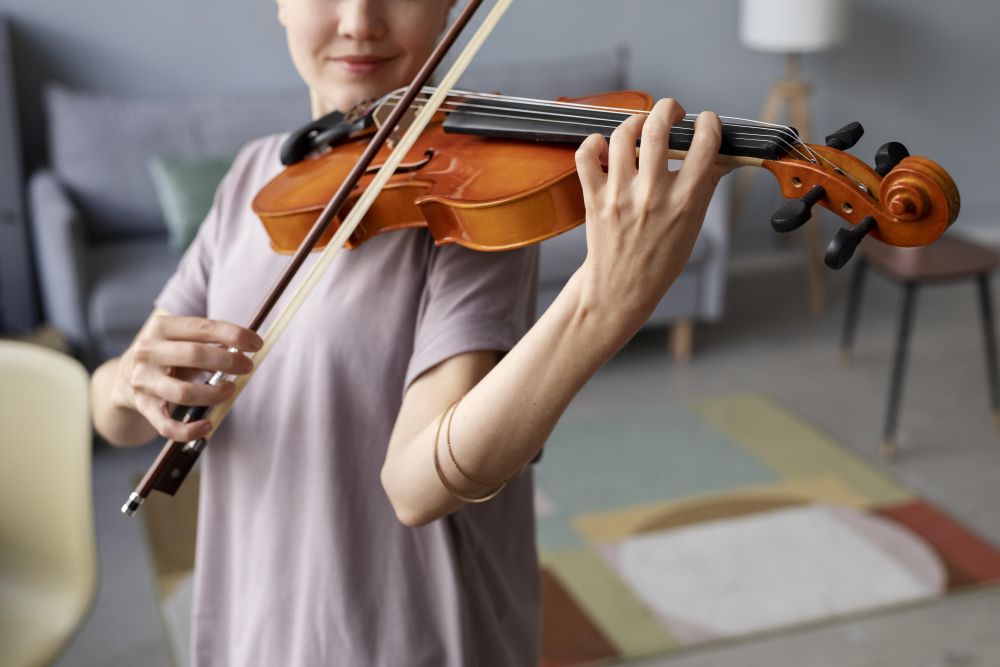
For those seeking to master one of the world’s most challenging and rewarding instruments, violin lessons Singapore provides access to a depth of expertise that rivals many established musical centres across the globe. This small nation has quietly cultivated a reputation for excellence in string education, producing musicians who regularly earn places in prestigious orchestras and conservatories worldwide. The journey from tentative beginner to confident violinist is neither quick nor easy, but the infrastructure supporting that journey in Singapore is remarkably robust.
The Reality of Learning Violin
Anyone contemplating violin lesson in singapore should understand what they are getting themselves into. The violin does not offer immediate gratification. Unlike a piano, where pressing a key produces a clear note, the violin requires precise bow control, finger placement, and posture before it yields anything approaching music. The first weeks often produce sounds that test the patience of both student and household members.
Yet this difficulty is precisely what makes the instrument so compelling. Chen Wei, a violin instructor with fifteen years of teaching experience in Singapore, puts it plainly: “The violin humbles everyone at first. I’ve taught doctors, lawyers, and high-achieving students who are used to mastering things quickly. The violin doesn’t care about your credentials. It demands respect, patience, and honest work.”
This candid assessment is refreshing in an educational landscape sometimes prone to overpromising results. The best violin lessons in Singapore share this characteristic: they are honest about the challenges whilst providing the structured support needed to overcome them.
Why Singapore’s Violin Education Stands Out
Several factors contribute to the quality of violin instruction available here. Singapore’s emphasis on music education in schools has created a steady pipeline of trained instructors. Many studied at institutions like the Yong Siew Toh Conservatory before pursuing further training abroad and returning to teach.
The competitive nature of Singapore’s education system, whilst sometimes criticised, has produced an environment where mediocrity struggles to survive. Violin instructors must demonstrate results. Students and parents research thoroughly before committing. This market pressure, combined with genuine passion for the instrument, has elevated teaching standards across the board.
What Quality Instruction Looks Like
Effective violin lessons in Singapore typically incorporate several essential elements:
- Proper foundational technique from the very beginning
- Regular attention to posture and body mechanics
- Systematic progression through established method books
- Integration of music theory alongside practical playing
- Performance opportunities to build confidence
- Honest feedback about progress and areas needing work
The emphasis on fundamentals cannot be overstated. Poor habits established early become exponentially harder to correct later. A quality instructor will spend considerable time on seemingly basic matters: how you hold the bow, the angle of your wrist, the position of your shoulder. These details matter profoundly.
The Investment Required
Learning violin represents both a financial and temporal commitment. Violin training in Singapore ranges from affordable group classes to premium private instruction. Private lessons generally command higher fees but offer individualised attention that can accelerate progress significantly.
Beyond tuition, there is the instrument itself. Entry-level violins suitable for beginners are reasonably priced, but as students advance, the need for better instruments grows. Many instructors in Singapore can provide guidance on purchasing or renting appropriate instruments at various skill levels.
Time investment is equally significant. Daily practice is non-negotiable for meaningful progress. Most instructors recommend at least thirty minutes daily for beginners, increasing as technical demands grow. This is where many students stumble. The violin reveals quickly who is serious and who is merely curious.
The Adult Learner Phenomenon
An interesting trend in Singapore’s violin education landscape is the growing number of adult beginners. Professionals in their thirties, forties, and beyond are taking up the instrument, often fulfilling childhood dreams deferred by academic or career pressures.
Rachel Goh, who began violin lessons at thirty-five, describes her experience: “I won’t lie and say it’s easy. My fingers ache, I get frustrated, and I’ll never be a virtuoso. But there’s something deeply satisfying about working towards something purely for its own sake, with no career benefit or external validation. It’s just me and the music.”
This perspective captures something essential about learning violin as an adult. Without the pressure of examinations or competitions, adult learners often develop a healthier relationship with practice and progress, even if their technical advancement is slower than younger students.
Choosing Your Path Forward
The proliferation of options for violin instruction in Singapore can feel overwhelming. Consider your goals honestly. Are you preparing for conservatory auditions? Seeking a fulfilling hobby? Hoping to play in community orchestras? Different objectives require different approaches.
Trial lessons offered by many instructors provide valuable insight into teaching styles and compatibility. The relationship between student and teacher matters enormously in violin education. You need someone whose communication style resonates with you, who pushes you appropriately without crushing your enthusiasm.
Location matters too, though perhaps less than quality of instruction. Singapore’s excellent public transport means most areas are accessible, but convenience affects consistency. A slightly less convenient location with superior teaching often proves more valuable than mediocre instruction nearby.
The Long View
Learning violin is not a project with a clear endpoint. Even professional violinists speak of continually discovering new dimensions of technique and interpretation. This open-ended nature frustrates some students but enchants others.
For those willing to embrace the challenge, the rewards extend beyond music itself. The discipline required, the attention to detail, the patience with gradual improvement, these qualities transfer to other domains of life. The violin teaches persistence in an age of instant gratification. Whether you aspire to perform professionally or simply wish to play for your own satisfaction, the comprehensive instruction available through violin lessons Singapore provides a foundation for that lifelong journey.